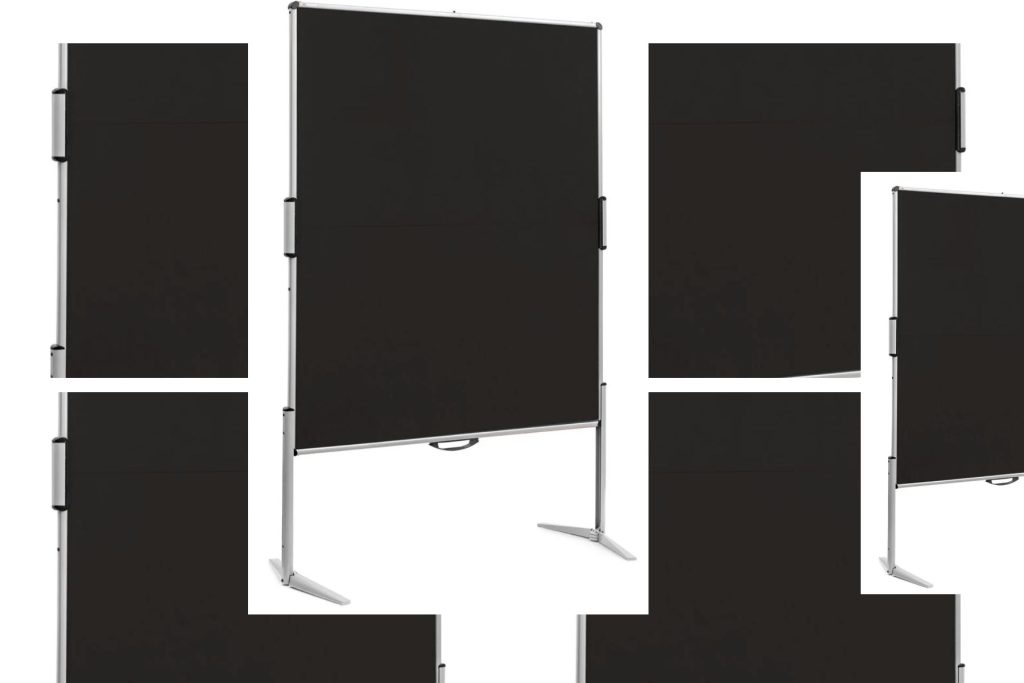
If boredom is the death of a facilitated event activity, being engaged is surely the life blood. Engagement is the watchword and is the fundamental reason behind using pinboards where possible.
Which has better engagement?
a) Asking a question and then you, the facilitator, writing down what some (or all) of the group say.
b) Asking a question and letting the group think and write their own answers.
The end result of a) is:
A list, perhaps a big list, written as a list. With no flexibility, linking or process.
The end result of b) is:
A fluid list, on coloured cards, that can be moved, clustered, added to, or questioned. One pinboard has the working area of about four flip charts. Comments can be added and moved at any time – complete flexibility.
Skills needed:
- Ability to design the question.
- Understanding and demonstrating the guidelines for effective card writing.
- Management of lots of cards so boredom and repetition are avoided.
- Ensuring all cards are understood and placed under the direction of the group – not the facilitator.
Ensuring cluster titles are group driven. If the group have written and ‘managed’ the cards themselves, they will be in good state to decide what should happen next.
According to the 80/20 rule, where should we spend our time?
Groups work – on their own. A pinboard or two can be prepared with a template for subgroups to work on. Using cards, colour and shape, discussions can happen visually.
Ideas up on a board do not carry the personal animosity that a face to face discussion across a table could cause (we have strategies to handle conflict).
Skills needed:
- Designing templates.
- Briefing the best way for the sub group to work.
De-briefing the templates, ideally, without presentations.
We tend to use a ‘gallery’ walk-around commenting with specific cards and notations.
Once ideas have been accepted by the groups, then putting agreed actions on to the action plan follows. It is part of the natural flow and happens easily.
The above steps are just some out of many options – all driven by the group not by the facilitator.
Two last points of concern:
Many facilitators use cards on brown paper on walls. What happens here is the group all move to the wall(s), leaving the room empty. Pinboards can create many walls in the room, using all the space. They can section off parts. They can create a flowing process.
Also, quite a common error is to allow a group to do their own clustering. Whilst it is easy for the facilitator and a result will develop, it’s only the active people who will get really involved. The more passive, quiet or shy people will hang around at the back and contribute little – if anything.